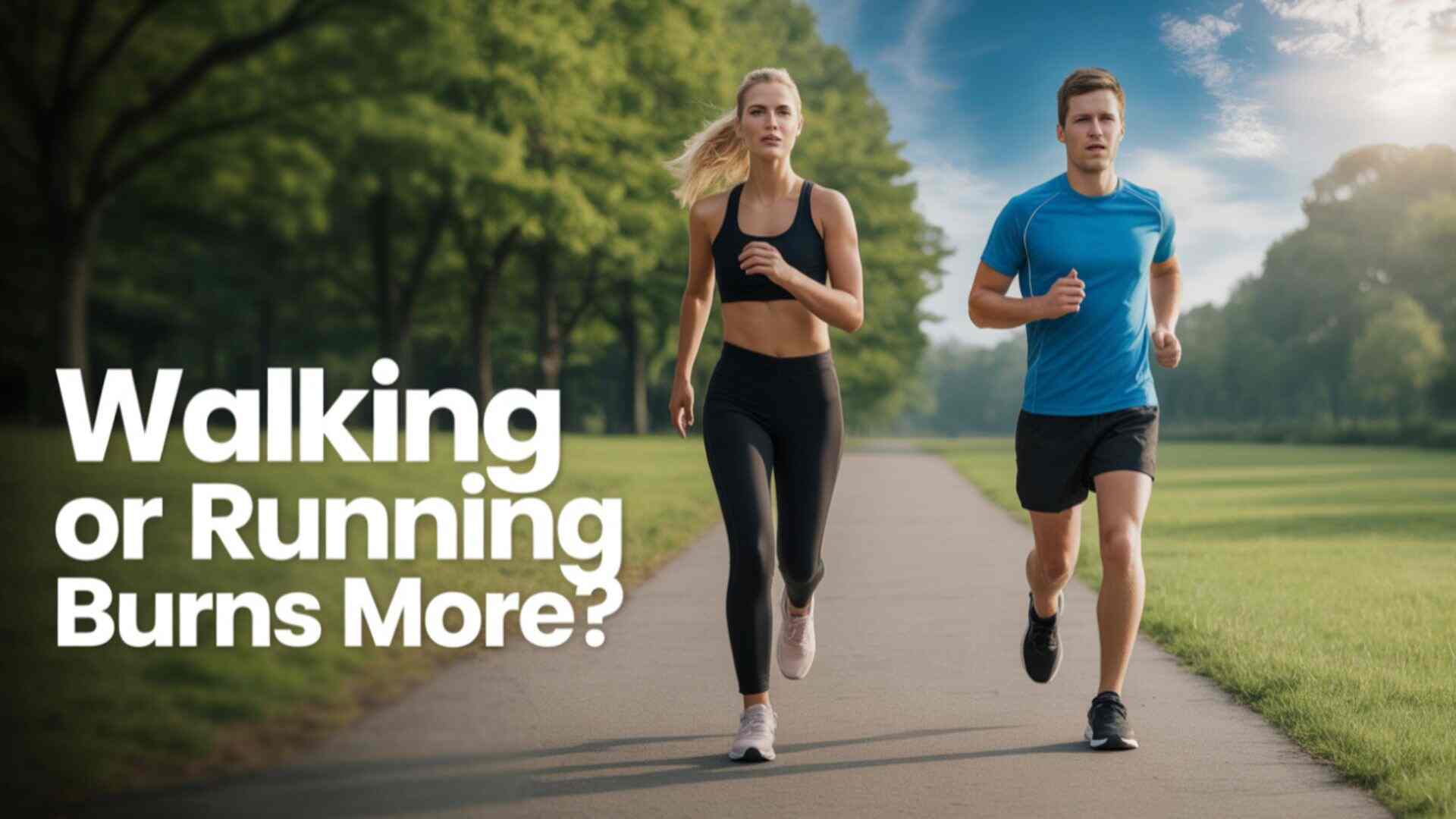
Target Audience
• Adults aged 18–50, fitness beginners, busy professionals, those with mild joint pain, or those seeking sustainable weight-loss routines.
Key Benefits of Walking
• Very low impact—ideal for individuals with joint issues, obesity, or injury recovery.
• Regular brisk walking lowers body fat, supports cardiovascular health and can help manage blood pressure, cholesterol, and diabetes.
• Can be sustained daily, increasing adherence for long-term weight management.
• Mental wellness boosts—reduces stress and depressive symptoms while improving overall mood.
• “Brisk walk for at least 30 min, 5 days/week” is widely recommended to meet health guidelines.
• For extensive insights: “The multifaceted benefits of walking for healthy aging” by Z Ungvari et al., was published in July 2023, freely available at PubMed Central – PMC10643563.
Key Benefits of Running
• High-calorie burn in less time, ideal for effective and efficient weight loss.
• Raises metabolic rate (EPOC), so the body burns more calories after the run ends.
• Significantly boosts cardiovascular, bone, and overall fitness health.
• Can help curb cravings and manage weight better over time.
• For more detail: “How Running Helps You Lose Weight” by Ryan Raman was reviewed in April 2023, see Healthline.
Scientific Studies or Insights
• A 2023 study demonstrated that both walking and running meaningfully reduce body fat and BMI, but running does so more rapidly per unit of time and distance.
• Running burns more calories per minute than walking; for example, a 150-pound person burns about 680 calories per hour running at 6 mph versus 272 calories walking at 3.5 mph, as explained in “Is Running Better than Walking for Weight Loss?” on Yahoo Health.
• Harvard University’s Nutrition Source confirms walking is highly beneficial for cardiovascular health, blood pressure, and daily calorie expenditure.
• If total energy output is matched—by walking longer—walking can produce similar weight-loss outcomes as shorter runs.
• “Energy expenditure comparison between walking and running in average fitness individuals” by LD Wilkin et al., published in Journal of Strength and Conditioning Research, April 2012, is available via PubMed.
Which Should You Choose?
• Choose walking if aiming for low injury risk, long-term adherence, or if just starting out with exercise regimes.
• Choose running for faster calorie burn, time efficiency, and more dramatic short-term weight loss (if physically prepared).
• Scientific consensus: The activity you’ll stick with matters more for sustainable weight loss than intensity alone.
Final Thoughts
• Both walking and running are highly effective for weight loss and general health, as proven by large-scale recent studies and ongoing research across international journals.
• Always consult a healthcare provider for tailored exercise advice, especially with preexisting conditions.
• For more evidence and recommendations, see these authoritative sources:
○ Walking for Exercise – Harvard Nutrition Source
○ The multifaceted benefits of walking (PMC10643563)
○ How Running Helps You Lose Weight – Healthline
○ Calories Burned Running vs Walking – Yahoo Health
○ Energy expenditure comparison between walking and running – PubMed
Resources
1. https://nutritionsource.hsph.harvard.edu/walking/
2. https://pmc.ncbi.nlm.nih.gov/articles/PMC10643563/
3. https://www.betterhealth.vic.gov.au/health/healthyliving/walking-for-good-health
4. https://www.nhs.uk/live-well/exercise/walking-for-health/
5. https://www.loseit.com/articles/science-backed-benefits-of-walking-for-your-health/
6. https://www.yahoo.com/lifestyle/running-better-walking-weight-loss-185104963.html
7. https://www.healthline.com/nutrition/running-for-weight-loss
8. https://pmc.ncbi.nlm.nih.gov/articles/PMC10690982/
9. https://www.verywellhealth.com/health-benefits-of-running-8676076
10. https://pubmed.ncbi.nlm.nih.gov/22446673/
11. https://pmc.ncbi.nlm.nih.gov/articles/PMC9209660/
14. https://www.healthline.com/health-news/running-wont-help-you-lose-weight
15. https://www.cliffsnotes.com/study-notes/21297853
16. https://www.sciencedirect.com/science/article/pii/S2589936825000313
17. https://ods.od.nih.gov/factsheets/ExerciseAndAthleticPerformance-HealthProfessional/
18. https://www.fao.org/4/i3253e/i3253e.pdf
19. https://ginasthma.org/wp-content/uploads/2024/05/GINA-2024-Strategy-Report-24_05_22_WMS.pdf
Latest Post
-

-

Low-Impact vs No-Impact: What People 40+ Should Know
November 29, 2025 -
Signs Your Body Can’t Handle High-Intensity Workouts
November 26, 2025 -
20-Minute Home Workout for Busy Professionals Over 40
November 23, 2025 -
Best Low-Impact Fat Loss Exercises for Adults 40–65
November 23, 2025 -
Why High-Intensity Workouts Are Dangerous After 40
November 23, 2025 -
Beginner’s Low-Impact Workout Plan for Adults Over 40
November 21, 2025 -
Acid Reflux and Natural Remedies
November 17, 2025 -

Fitness Over 40 & Chair Yoga Workouts as Remedy
November 13, 2025 -
Multivitamins for Thyroid Support in India
November 7, 2025
